



To Amplify Kindness for IVY 2026
Event Type
Event
Event Scope
Global
Regional
Region
Asia and the Pacific
Country
China
Address
401, 4th Floor, Peace Square, Dalian, China
Date range
2025-05-06 12:15 to 2025-11-30 12:15
Hosts
VOW Center
2026 has been declared by the United Nations as the "International Year of Volunteers for Sustainable Development (IVY2026)", presenting us with a global opportunity to enhance the impact of volunteerism. From May to November 2025, we will promote civil society volunteer service dialogue activities in six Chinese cities in response to IVY2026’s initiative of "advancing volunteer services for the Sustainable Development Goals". We also plan to set up a booth and deliver a sharing speech at the China Philanthropic Foundation Development Forum on November 21, 2025, to expand the influence of IVY2026.
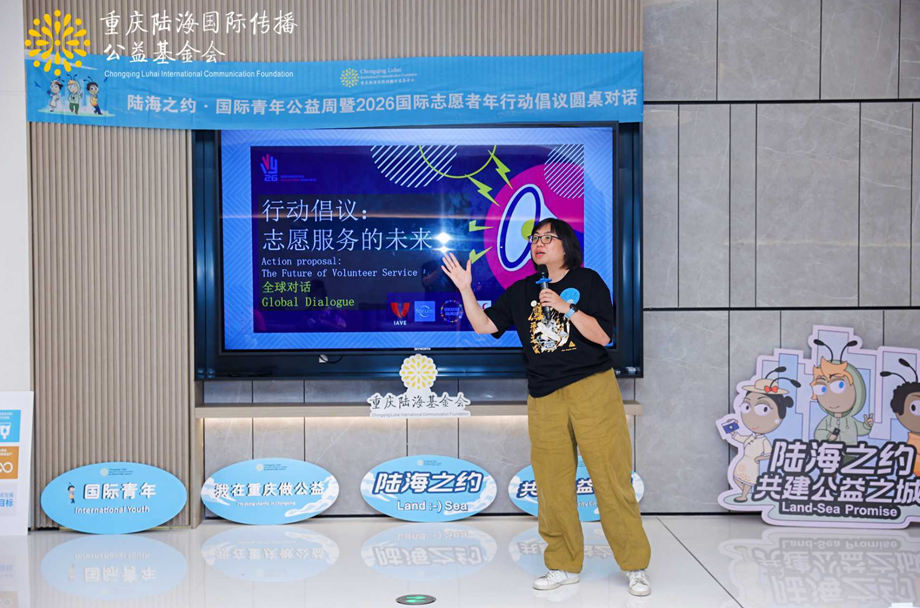
From June 6 to July 6, 2025, the VOW CENTER (Dalian) will collaborate with five influential Chinese volunteer organizations—Traceless China (Jinan), Social Innovation Star Social Enterprise Service Platform (Chengdu), Land and Sea International Communication Foundation (Chongqing), NGO2.0 Service Platform (Shenzhen), and Jilin Province Loving Heart Volunteer Association (Changchun)—to host six cross-city volunteer service dialogue workshops. Participants will include environmental organizations, social enterprise platforms, charitable foundations, NGO data research institutions, and regional volunteer service associations, focusing on priority areas and related agendas for volunteerism in 2026. The participating groups will consist of local government representatives, civil society organizations, business delegates, academic professionals, and youth college student representatives. The workshops will center on promoting volunteer participation, telling compelling volunteer stories, recognizing and rewarding volunteers, conducting research on volunteer organizations, building volunteer partnership networks, and organizing innovative volunteer activities. Through these six regional dialogues, 20 action recommendations have been compiled and consolidated into 5 core initiatives as follows:
I. Build a Full-Chain Volunteer Empowerment and Support System
• Core Goal: Comprehensively enhance volunteers’ participation experience and sense of gain from recruitment and training to rights protection, and expand the scope of participation.
• Key Measures:
1. Innovate recruitment models: Utilize youth-oriented platforms such as short videos and social media to design targeted participation channels for students, teenagers, and social professionals, achieving precise matching between recruitment and service needs.
2. Improve the growth system: Establish a systematic training mechanism, volunteer service growth files, and certification systems to enhance professional sense of achievement and social recognition.
3. Strengthen rights protection: Provide basic guarantees such as transportation, catering, and insurance, set up feedback channels, advance legal protection frameworks, and prioritize the safety and rights of grassroots volunteers including women.
4. Eliminate participation barriers: Break cognitive biases and group restrictions, establish special funds to support youth and marginalized groups, and promote the democratization of volunteer services.
II. Create a Digital and International Collaborative Ecosystem for Volunteer Services
• Core Goal: Empower efficiency improvement through digitalization, expand resource boundaries through internationalization, and build an interconnected volunteer service network.
• Key Measures:
1. Build digital platforms: Establish online channels such as public welfare forums and dedicated websites to realize the full-process digitization of activity release, registration, check-in, and feedback, and share project progress and experiences.
2. Promote cross-border cooperation: Facilitate joint projects, exchange visits, and knowledge sharing among international volunteers, local public welfare organizations, and institutions in volunteers’ home countries, integrating global resources to address common social challenges.
3. Establish community networks: Set up international volunteer interest associations based on universities to promote experience sharing, project cooperation, and virtual seminars.
4. Unify data standards: Promote the improvement of a national unified volunteer service recording platform and database to achieve efficient resource integration and visual tracking.
III. Address Funding Challenges and Build a Sustainable Investment Mechanism
• Core Goal: Broaden funding channels from multiple dimensions, optimize the efficiency of fund use, and ensure the long-term sustainable operation of volunteer services.
• Key Measures:
1. Policy incentives and guidance: Governments establish special funds, optimize fiscal allocation, provide tax incentives for corporate public welfare investment, and incorporate volunteer services into local government performance evaluations.
2. Diversified fundraising: Conduct crowdfunding and social donation activities, deepen cooperation with charitable organizations, leverage the "blood-making capacity" of social enterprises, and attract long-term corporate investment.
3. Hierarchical investment promotion: Tap local resources at the regional level, develop demonstration projects at the national level, and secure international public welfare funding support at the international level.
4. Standardize fund management: Improve the financial transparency of projects, establish standardized fund use mechanisms, and strengthen the supervision of policy implementation.
IV. Promote In-depth Integration of Volunteer Services with Grassroots Governance and Sustainable Development
• Core Goal: Expand the application scenarios of volunteer services, enhance social value, and form a virtuous cycle of "service-governance-development".
• Key Measures:
1. Deepen integration with grassroots governance: Establish incentive mechanisms such as "volunteer points", set up community convenience service outlets, focus on the needs of vulnerable groups including the elderly and children, and promote four-party cooperation among governments, enterprises, social organizations, and residents.
2. Focus on the Sustainable Development Goals: Prioritize long-term projects such as environmental protection, community development, educational support, and campus environmental education, compile biodiversity knowledge manuals, and expand educational venues.
3. Create demonstration carriers: Build volunteer service practice bases and sustainable development volunteer service communities to form replicable and promotable integration models.
4. Strengthen professional support: Cooperate with universities to develop the Volunteer Service Standards Manual, invite experts to enhance the professionalism of activities, and promote the professionalization and systematization of volunteer services.
V. Innovate Value Evaluation and Brand Communication to Consolidate Multi-Stakeholder Synergy
• Core Goal: Enhance the social recognition and influence of volunteer services, and build a sound pattern of universal participation.
• Key Measures:
1. Establish a value evaluation system: Refer to the "Social Return on Investment" model to establish unified national and international quantitative standards for volunteer service value, and visually present service impact.
2. Promote the transformation of social cognition: Break the prejudice of volunteers being regarded as "free labor", position volunteers as "social innovation partners", and clarify the conceptual boundaries between public welfare, charity, and volunteer services.
3. Strengthen brand communication: Build branded communication platforms to expand influence through inclusive information dissemination, strategic media outreach, and educational activities.
4. Consolidate synergy: Call on governments, enterprises, non-governmental organizations, and all sectors of society to participate, strengthen grassroots community empowerment and global partnerships, and form a multi-stakeholder collaborative ecosystem.