



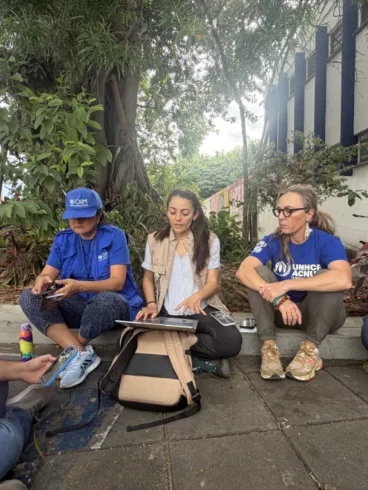
IVY 2026: UNHCR Gigs Mobilizing Internal Skills through Structured Volunteerism
Volunteering takes many forms. Within UNHCR, Gigs enable colleagues to contribute their time, knowledge and expertise to short-term projects beyond their regular functions.
These flexible, skills-based opportunities connect colleagues across teams, functions and locations. They strengthen organizational capacity while supporting professional development, collaboration and knowledge sharing.
What is a UNHCR Gig?
A UNHCR Gig is a short-term, skills-based project or assignment advertised through an internal digital platform. Gigs are typically virtual, require a limited weekly time commitment and allow colleagues to:
•contribute their knowledge and expertise;
•develop and apply professional skills;
•collaborate across teams and locations;
•expand their professional networks;
•support time-bound organizational priorities; and
•can mostly be completed remotely/virtually but some require in-person, on-site commitment
Gigs are open to colleagues across contract types, functions and grade levels, making the model an inclusive form of organizational participation.
Gigs do not normally involve additional remuneration. Any potential travel or related costs for in-person assignments would be clarified in the Gig announcement and agreed in advance.
The Gig programme draws on a global pool of more than 1,500 approved colleagues and supports an average of approximately 43 completed assignments each year.
Gig activity spans UNHCR headquarters, global service centres, Regional Bureaux and field operations, enabling specialized knowledge to reach teams across geographical and organizational boundaries.
Areas of contribution
Recurring assignments include virtual projects, learning facilitation, content development, focal-point functions, taskforce participation, committee membership and other project-based activities.
The skills mobilized through Gigs include:
•communication, teamwork and analytical thinking;
•data analysis, project management and monitoring and evaluation;
•training, facilitation and knowledge management;
•protection-related expertise;
•artificial intelligence, automation and cybersecurity; and
•translation, editing and communications.
These opportunities allow colleagues to contribute existing expertise while gaining exposure to new areas of work.
Contribution to volunteerism and sustainable development
UNHCR Gigs represent an evolving form of skills-based internal volunteerism. Participants voluntarily contribute time and expertise beyond their regular functions, while host teams gain access to skills and perspectives available elsewhere in the organization.
By connecting colleagues’ capabilities with organizational needs, the model strengthens knowledge sharing, innovation and collaborative problem-solving. Gig assignments support areas such as protection, learning, communications, data, technology and programme management, thereby contributing to UNHCR’s work for forcibly displaced and stateless people.
Gigs complement other forms of volunteer engagement within UNHCR, including UN Volunteers and UN Online Volunteers.
Lessons learned
UNHCR’s experience indicates that structured internal volunteering benefits from:
•a transparent platform for sharing opportunities;
•clearly defined, time-bound assignments;
•realistic expectations regarding availability;
•clear skills and deliverables;
•support from host teams;
•recognition of contributors; and
•reliable data for tracking participation and outcomes.
Conclusion
UNHCR Gigs demonstrate how organizations can mobilize internal talent through flexible, voluntary and skills-based contributions. For International Volunteer Year (IVY) 2026, the model offers a practical example of an emerging form of volunteerism that connects people, skills and organizational needs in support of a shared humanitarian purpose.


