












Technical paper
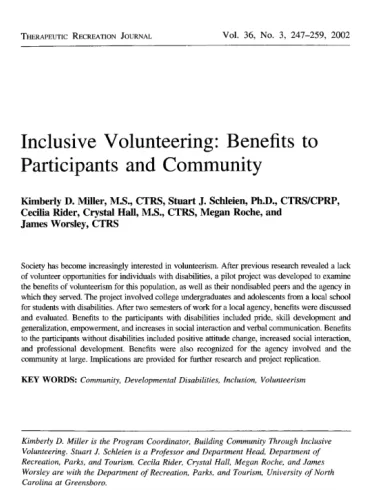
Inclusive volunteering: Benefits to participants and communities
Volunteerism
Download
English
Share on social media


Fast read
This study examines the benefits of volunteering for persons with disabilities as well as for their non-disabled peers and the agency they serve.
Synthesis
- This pilot study examines the outcomes of an inclusive volunteering initiative that paired university students with adolescents with moderate to severe developmental disabilities. Using a qualitative, multi-method evaluation design, the researchers collected data across two academic semesters through detailed field observations, pre- and post-participation focus groups with volunteers with and without disabilities, and interviews with special education staff.
- Findings demonstrate significant benefits for all participants. Volunteers with disabilities showed notable gains in social interaction, verbal communication, teamwork, and task-related skills. They developed a strong sense of pride, ownership, and empowerment through contributing visibly to a community project - the development of a nature trail for a local nonprofit. Volunteers without disabilities reported increased confidence, reduced anxiety about interacting with people with disabilities, and meaningful shifts in attitudes, including a greater focus on abilities and strengthened advocacy perspectives. Both groups formed authentic social connections fostered by cooperative, task-centred learning.
- The study concludes that structured, cooperative volunteer programmes can enhance community integration, dismantle stereotypes, and expand meaningful opportunities for people with disabilities, while also enriching the volunteer workforce.