New resources for government entities to collaborate with volunteers from Kazakhstan
Share on social media


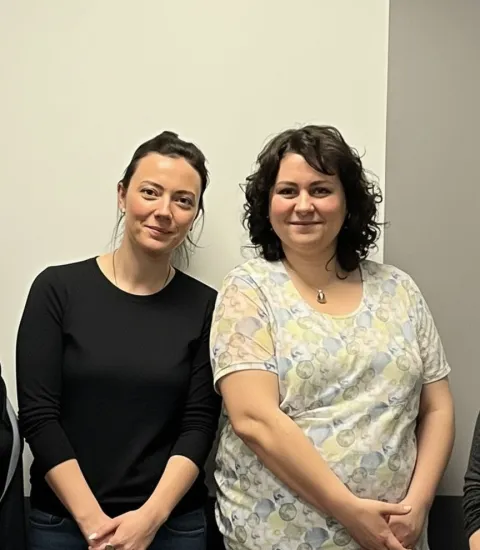
Tatyana Tinkai Koreshkova works at the National Volunteer Network as a national volunteering expert, project leader and transformational coach (Teach For All certified). Since 2019, she has been leading large-scale social programs nationwide. She is a laureate of the Republican Tandau Award for implementing a nationwide ethno-volunteering project, co-developer of Kazakhstan's national volunteering methodology, and author of research and publications on social innovation in the volunteer movement
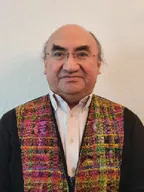
Yelena Amreyeva works for the National Volunteer Network as a national expert on volunteering, methodologist, researcher and trainer. Since 2018, she regularly participates in the creation of methodological materials and manuals on volunteering, collecting and analyzing data on volunteering in the country. Since 2020 participates in the development of strategic documents for the Ministry in charge of volunteering in Kazakhstan (roadmaps, standards, methodological recommendations). In 2024, as a national consultant, she prepared and wrote the Review on the State of Volunteering in Kazakhstan for the UNV publication "State of Volunteering in Central Asia Review
Why measuring volunteering is important in Kazakhstan and how it supports national development and policy priorities?
Measuring volunteering is key to developing a sustainable volunteer ecosystem in Kazakhstan, as it allows us to go beyond simply counting the number of volunteers or hours worked. It is far more important to understand the real social impact of volunteering, its influence on public awareness, the level of mutual trust, solidarity, and citizens' attitudes toward the state. Volunteering builds social capital, strengthens community ties, and promotes a culture of mutual aid. These changes are difficult to express in quantitative terms, but they reflect the profound impact of volunteering on society and social stability. Qualitative research and comprehensive assessment methods make it possible to record this contribution, which today is often perceived intuitively but lacks sufficient analytical confirmation.
The availability of reliable data on the social and economic impact of volunteering makes the contribution of volunteers more visible to the state, donors, and other stakeholders. This strengthens the basis for decisions on funding, developing support programs, and shaping long-term policies in the field of civic participation.
In addition, systematic measurement of volunteering makes it possible to link volunteer contributions with national development priorities in education, social support, health care, environmental protection, and civic engagement. Understanding the scale and quality of this contribution helps to build more effective partnerships between the state, the non-profit sector, and civil society. Thus, measuring volunteering contributes not only to strengthening the volunteer infrastructure, but also to developing its competencies and capabilities. It creates a basis for proportionate investment in human capital, institutional support, and the expansion of volunteering practices, which in the long term strengthens the contribution of the volunteer movement to the sustainable development of Kazakhstan.
How did collaboration between the Kazakhstan National Volunteer Network and government agencies develop in the creation of methodological materials, and what needs did it reflect?
Collaboration between the Kazakhstan National Volunteer Network and government agencies, including the relevant sectoral ministry, developed gradually in response to practical requests from both volunteer organizations and government agencies. As the volunteer movement expanded in the country, it became clear that the existing regulatory and organizational mechanisms were insufficient for systematic and sustainable work with volunteers in different sectors. At the initial stage, the interaction was mainly consultative in nature. Representatives of the volunteer community shared their accumulated practical experience with government agencies, pointed out challenges in working with volunteers, and suggested solutions. Gradually, this cooperation evolved into a more institutionalized format—the joint development of methodological recommendations, standards, and training materials.
A key problem identified was the lack of a common understanding of how government agencies, educational institutions, medical facilities, social services, and local executive bodies should work with volunteers. In many cases, cooperation was spontaneous, without clear rules, coordination mechanisms, or a support system. This led to volunteer overload, inefficient use of their potential, and decreased motivation. An additional need was the lack of unified tools for recording, supporting, and developing the capacities of volunteers. Institutional leaders often perceived volunteers as a temporary resource, without investing in their training, adaptation, and long-term involvement.
In response to these challenges, the Kazakhstan National Volunteer Network, together with the Ministry of Culture and Information, and other agencies, initiated the development of methodological materials for various areas social protection, education, health care, environment, youth policy, and emergency response. These materials were aimed at establishing a unified standard for interacting with volunteers. Official statements and working documents from the ministry have repeatedly emphasized the importance of such cooperation.
“To develop the volunteer movement, government agencies need a modern methodological framework. These guidelines provide a comprehensive approach to organizing this work,” - Kim Vera, Deputy of the Mazhilis of the Parliament of the Republic of Kazakhstan and Chairwoman of the National Volunteer Network
“Methodological materials will improve the effectiveness of interaction between government agencies and volunteers and ensure compliance with the principles of voluntariness and gratuitousness,” -Gulbara Sultanova. Chairwoman of the Committee for Civil Society Affairs, Ministry of Culture and Information of the Republic of Kazakhstan
During the joint work, special attention was paid to adapting the materials to the real conditions of the regions, taking into account the specifics of different industries and levels of government. Representatives of the volunteer network provided practical expertise, while government agencies provided institutional support and scaling of the developed solutions. As a result, cooperation evolved from scattered initiatives to a systematic partnership model based on mutual trust and role distribution. Methodological materials became a tool not only for regulation but also for developing the competencies of relevant institutions and volunteer coordinators. Thus, the main identified need was to create a unified, understandable, and practice-oriented system for interacting with volunteers. The joint work of the Kazakhstan National Volunteer Network and government agencies made it possible to respond to this need, improve the quality of the partnership, and lay the foundation for the sustainable development of the volunteer infrastructure in the country.
How can materials containing general knowledge help practitioners and policymakers better recognize, measure, and support volunteering at the national and regional levels?
Materials containing general knowledge about volunteerism primarily help to form a common understanding of what exactly constitutes volunteering and what constitutes other forms of “good deeds.” Society often does not draw a clear line between charity, volunteering, and activism. Meanwhile, volunteering has its own specific characteristics: it is voluntary, unpaid activity for the benefit of society, which is regulated by separate norms and requires special support mechanisms. When these differences are recorded in methodological and analytical materials, it becomes easier for practitioners and government officials to correctly identify and take into account volunteer activities. In addition, such materials help to improve the quality of assessment and measurement. They make it possible to take into account both direct assistance to beneficiaries and the broader social impact of volunteering. Its influence on the formation of communities, the development of civic engagement, and the creation of an atmosphere of trust and solidarity in society. Unlike charity, which is often individual and non-public in nature, volunteering is largely a movement that forms sustainable social ties and public practices, and it is important to reflect this in the system of indicators and monitoring.
The methodological function of such materials also plays an important role. They help to develop uniform approaches to organizing and supporting volunteer initiatives, interacting with government agencies, and adhering to the principles of voluntariness and gratuitousness. This reduces the risks of formalization, coercion, or substitution of volunteer activities with other formats of activity that can negatively affect the motivation of participants and the public perception of volunteering. In addition to improving the effectiveness of the practices themselves and joint initiatives with the state, the methodological materials form a common field of understanding a single language used by volunteers, organizations, and government officials. In the long term, this creates a basis for unifying approaches to accounting and evaluation, facilitates the collection and comparison of data at the regional and national levels, and simplifies the calculation of the real contribution of volunteering to the society’s development. As a result, such materials become both a reference or training base and a tool for the systematic development of volunteering. They help to build a more informed, transparent, and sustainable model of support that takes into account both the benefits for specific individuals and the impact on the social environment as a whole. Read more documents here Methodological guidelines for state institutions on development of volunteerism in different sectors
Experts of the National Volunteer Network
Yelena Amreyeva
Tatyana Tinkai Koreshkova