

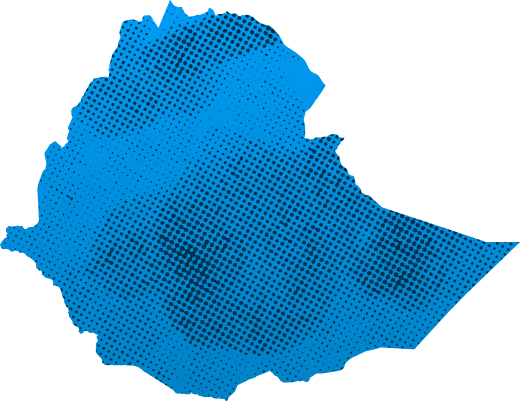
Volunteer statistics (ILO)*
Source: ILOSTATS. The data is collected by ILO from national statistical offices. As national statistics on volunteer work are produced using a variety of approaches and tools, direct and cross-country comparisons are not recommended. For more information, visit https://ilostat.ilo.org/topics/volunteer-work/
No data
Measurement work
Data source
- 2007
- 2008
- 2009
- 2010
- 2011
- 2012
-
2013
- Time Use Survey
- 2014
- 2015
- 2016
- 2017
- 2018
- 2019
- 2020
- 2021
- 2022
- 2023
- 2024
- 2025
- 2026
Laws, Policies, Schemes on Volunteering
Does the country have a piece of legislation on volunteering?
No data
Does the country have a national policy, scheme, plan or strategy specific to volunteering?
Yes
| Name of specific policy, strategy or plan on volunteering at the national level. | Year created | Source link | What are the relevant SDG areas/crosscutting themes of the policy, plan scheme or strategy? |
|---|---|---|---|
National Voluntary Community Service Programme |
2021 | View source |
Does the country have a sectoral and cross-sectoral policy, scheme, plan or strategy that mentions volunteering?
NoVNR Reporting
The 2017 Voluntary National Reviews on SDGs of Ethiopia: Government Commitments, National Ownership and PerformanceTrends
View source
Reporting positive contribution of volunteering to the SDGs
Paragraph 1, page 30
The National Health Extension Program launched since 2010/11 FY which mobilized the society at all levels has been remarkably successful in preventing and controling health problems. The program covered mainly family health, hygiene and sanitation, environmental health and health education. Health extension workers close to 38,000 have been trained and deployed to implement the program. ‘Voluntary Women Health Army’ were organized and deployed on health services. In this regard, 439,497 Women Health Teams and, each team with 5-persons, numbering 2,125,190 were organized enabling the improvement of critical and basic maternal and infants health care services.
No mention
Paragraph 1, page 8
It should be noted that the successful implementation of SDGs depends on collective efforts
between government, private sector, civil society, the scientific community, academia,
parliaments, local authorities, volunteers and other stakeholders, and the public at large.
Ethiopia
View sourceReporting on volunteering connected to matters of gender equality, women's empowerment or similar
Paragraph 1, page 78
The growing reliance on unimproved sanitation is largely driven by the limited availability of affordable, improved options, particularly in rural areas where sanitation products and services are scarce and fecal sludge management systems are either absent or inaccessible. Addressing these challenges requires urgent and coordinated action focused not only on infrastructure development but also on promoting sustainable behavioral change. To speed progress, the Government is championing TSEDU-Ethiopia—a flagship, volunteer-powered “cleanliness and dignity” movement. TSEDU mobilizes communities for regular clean-up drives, nurtures women-led sanitation micro-businesses, and promotes inclusive hygiene norms in schools, marketplaces, and public spaces. By scaling affordable hygiene options and solid-waste solutions nationwide, the initiative seeks to ensure that every woman, man, girl, and boy can access—and confidently use—dignified, safely managed sanitation services (Case Box 10).
Paragraph 1, page 123
Despite these efforts, women’s participation in peace initiatives remains limited. Only 0.9 percent of women reported involvement as leaders or organizers in peacebuilding, while 15.5 percent participated as volunteers or general members.
Paragraph 2, page 129
In context of fragmented and unpredictable development financing, volunteerism has played a vital role in advancing peace and sustainable development, particularly in areas such as education, public infrastructure, health, youth and women empowerment, and human rights. The Government has worked to institutionalize volunteerism through enabling policies and programs, including the Ethiopian National Volunteer Community Service Program (ENVCSP), the National Youth Policy, and sector-specific guidelines from MoWSA and the Ministry of Health. National data collected by ESS in 2020 and 2022 highlights growing engagement across diverse sectors, with tens of thousands participating in voluntary work, particularly in agriculture, industry, education, and health. In collaboration with key partners, it has strengthened volunteerism across the country, Ethiopian Red Cross Society (ERCS) alone registering over 258,000 volunteers, including 47,000 actively engaged. Regional governments like Oromia and Addis Ababa city administrations have also advanced localized initiatives targeting youth and women. Despite this momentum, challenges
persist, including the absence of a national volunteer policy, limited coordination among stakeholders, and insufficient data and recognition. Addressing these gaps will be critical to fully leveraging volunteerism as a means of SDG implementation.